


Recertification Training
Recertification requirements vary by state — see our state requirements reference. NTCP's recertification training and self-reported CME log help your agency stay ahead of expiring certifications. NTCP is not currently a CAPCE-accredited CE provider. See CME Tracking for details on how hours get logged.
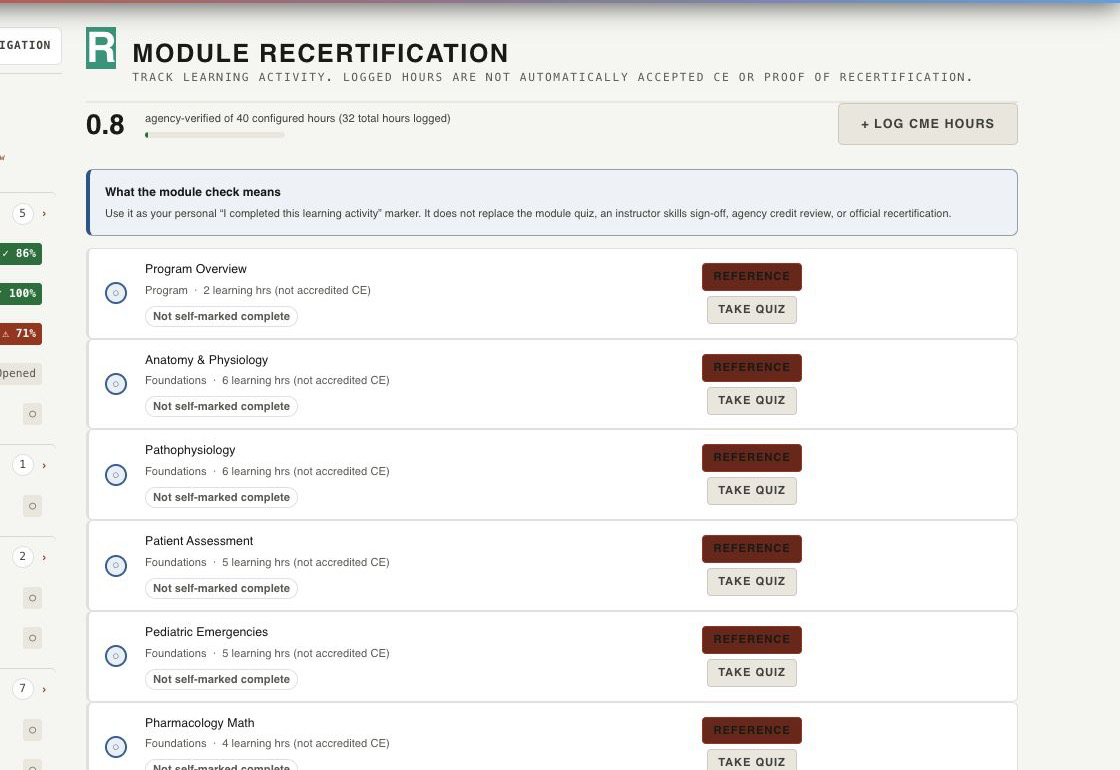
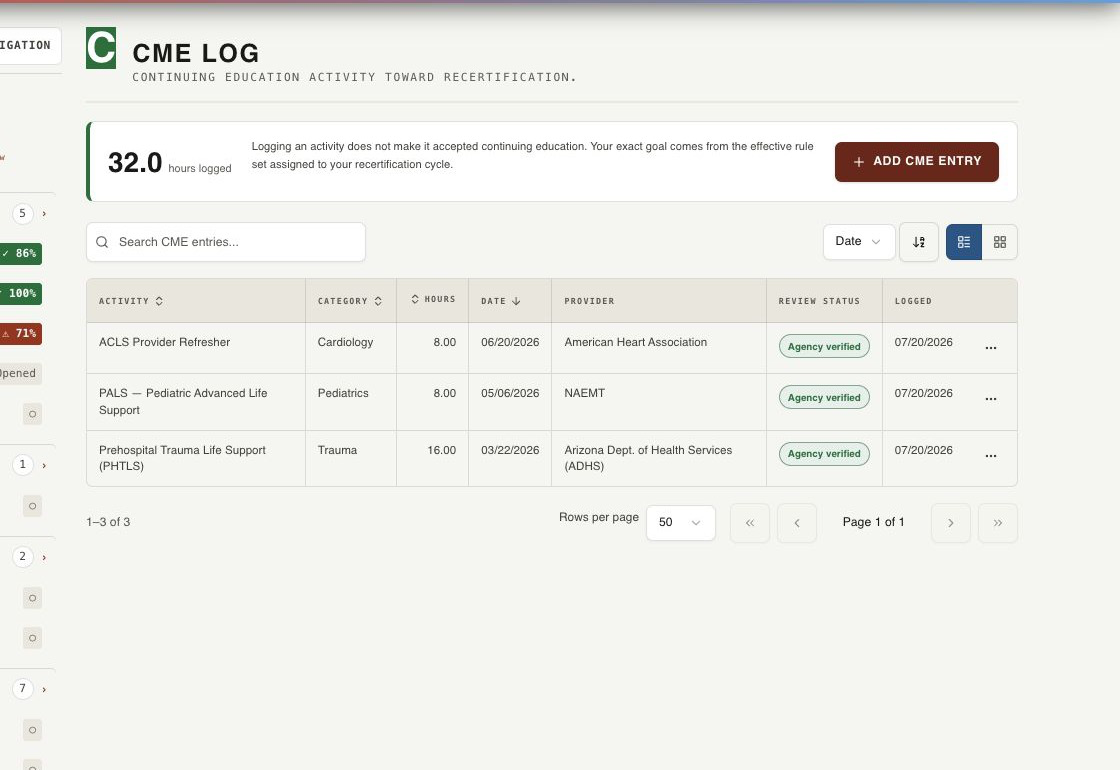
The tracker shows the exact assigned rule and counted evidence; outside authorities make their own acceptance decisions.
Current release-candidate UI · synthetic demonstration data
What recertification training covers
Recertification training in NTCP is built for personnel who already hold an EMT or Paramedic credential and need to refresh the material before a renewal deadline, not for someone starting from zero. It walks back through the same clinical content areas — airway, cardiology, trauma, medical emergencies, operations — but structured as a review: shorter modules, knowledge-check quizzes scored against the same 75% pass threshold used across the platform, and a self-reported CME log your agency can use to track who's on pace and who's falling behind. It's a companion to, not a replacement for, your state's official renewal process.
Choose a level
Recertification content is organized by credential level, mirroring the structure of our initial certification-prep training. Pick the level your personnel already hold to see the specific modules available.
EMT Recertification Training
Recertification training content for your EMT-level personnel.
Learn more →Paramedic Recertification Training
Recertification training content for your Paramedic-level personnel.
Learn more →Recertification vs. initial certification
It's easy to conflate the two, but the starting point is different. Certification-prep training (see EMT and Paramedic certification-prep) is aimed at candidates preparing for their first NREMT or state exam. Recertification training assumes that exam is already behind the provider and focuses on keeping knowledge current for a renewal cycle instead. Our Certification & Recertification resource lays out the distinction in more depth, and our NREMT vs. state certification guide covers how the national and state credentials relate to each other.
How this fits the rest of the platform
Recertification training doesn't stand alone — it's one piece of the same platform your agency already uses for initial training. Recertification-module activity remains visible, while externally completed education can be recorded in the self-reported log covered on our CME Tracking page. Module completion is not automatically accepted CE. Training officers and agency admins get a rollup of who's completed which recertification modules, and how close each person is to their renewal window, through Agency Training Management — the same agency-wide dashboard used for initial certification-prep progress. Providers who want extra practice ahead of a renewal-related exam can also use the Full Practice Exam, configuring a 20-, 40-, or 80-question run scored server-side with a per-content-area breakdown, and the Drug Label Lookup — a one-drug FDA label reference using RxNav and openFDA data — is available for medication review at any point in the recert cycle.
State requirements aren't one-size-fits-all
Renewal cycles, required CME hours, and fees are set state by state and change over time — we don't try to reproduce every jurisdiction's rulebook inside a training module. Our state requirements reference collects what we can confirm as a starting point, but the authoritative source is always your state EMS office or NREMT.gov directly. If a certification does lapse before renewal is complete, our guide on what to do if your certification lapses walks through the general paths back.
Who uses this
Recertification training licenses the same way the rest of NTCP does — per agency, not to individual providers shopping for a course. Fire departments, EMS services, hospital-based EMS programs, and training programs all use it to keep existing personnel current between renewal cycles rather than sending them out to find their own refresher course.
For Fire Departments
Keep EMS-certified firefighters current between shift schedules.
Learn more →For EMS Services
Agency-wide visibility into every provider's renewal timeline.
Learn more →For Hospital-Based EMS
Recertification training for hospital-employed EMS personnel.
Learn more →For Training Programs
Give graduates a path to keep their credential current after they leave your program.
Learn more →