


Agency Training Management
NTCP is built for the person actually managing an EMS agency's training compliance — not just the individual provider. Seat-based licensing, role-based dashboards, and roster-wide visibility, in one platform.
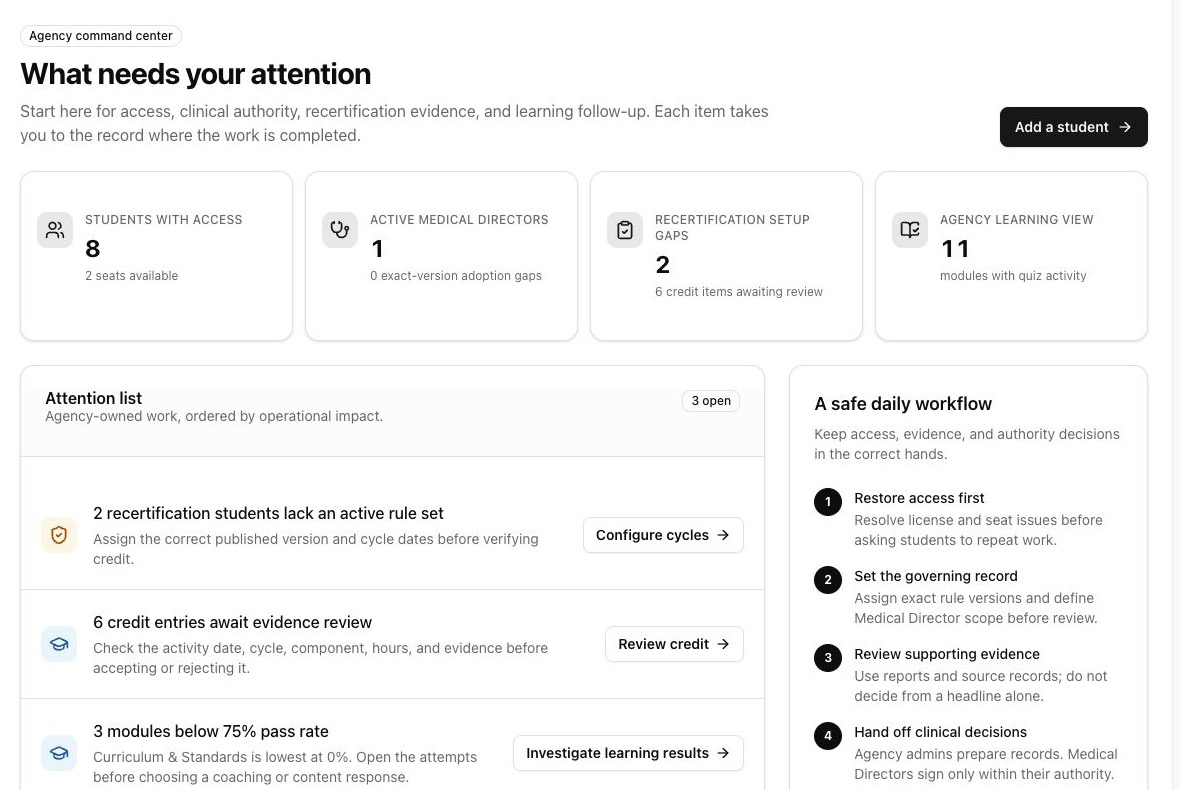
The agency dashboard starts with work that needs attention and links to the record where that work is completed.
Current release-candidate UI · synthetic demonstration data
Built around how agencies actually operate
Most EMS training tools are built for the individual provider studying for an exam. NTCP is built the other way around: for the training officer or administrator responsible for an entire roster's self-reported certification status, recertification dates, and education activity — with the individual provider's training experience sitting on top of that.
What's included
- Seat-based licensing — 5 or 10 seats per license, pooled and reassignable, annual auto-renewing
- Role-based dashboards — Students, Agency Admins, Medical Directors, and platform Owners see the work they own
- Certification-level tracking — per-person EMT/AEMT/Paramedic level, with self-reported expiry dates
- CME log + recert-deadline tracking — roster-wide, not per-spreadsheet
- Sales-gated onboarding — your agency signs up, an NTCP Owner reviews and approves, then you invite your own personnel
Who this is for
Every agency that licenses NTCP is structured a little differently, but the seat pool, the four role-specific workspaces, and the roster-wide training view underneath work the same way regardless. See how it maps onto your specific organization on the pages for fire departments, EMS services, hospital-based EMS programs, and training programs — each walks through how the licensing, roles, and reporting line up with how that kind of organization actually runs its roster.
The four roles, in detail
Owner is NTCP's platform-wide role — reviewing and approving new agency sign-up requests, managing every licensed agency across the system, and (for NTCP's own staff) the cross-agency revenue and content-approval views referenced below.
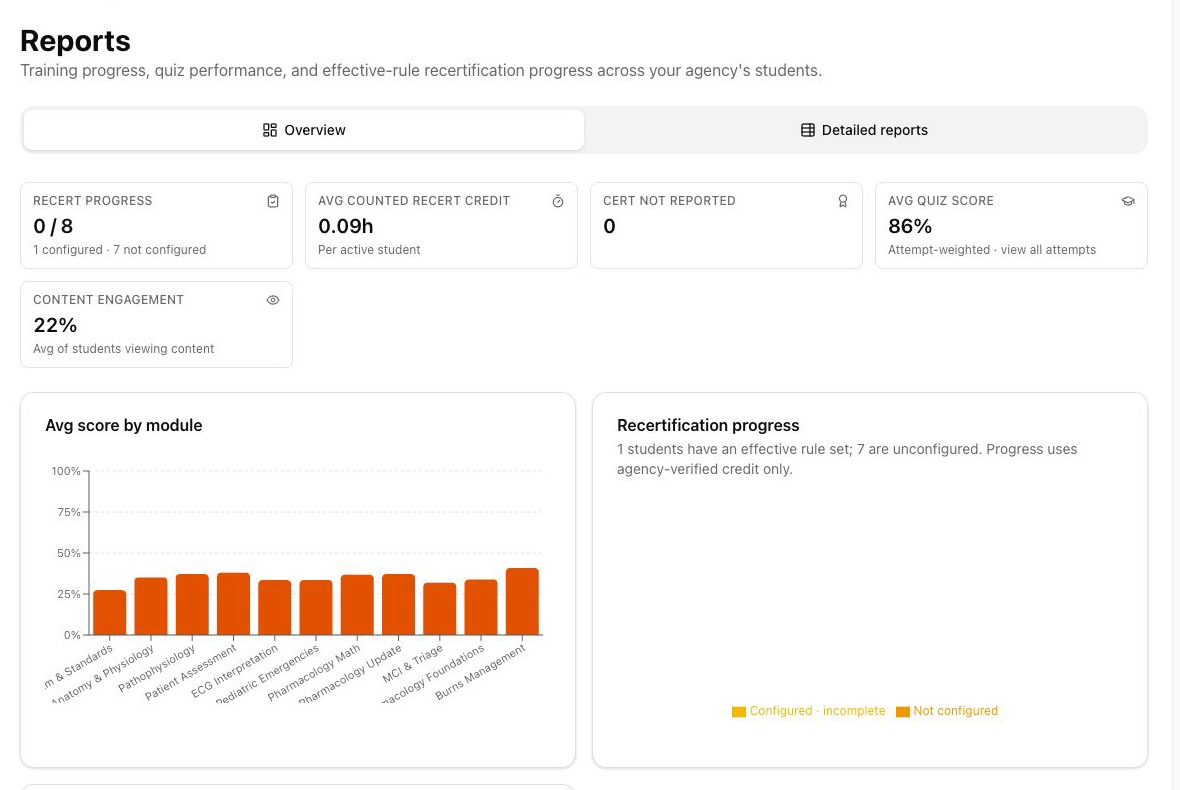
Agency Admin is the training officer or administrator role — the one this page is really written for. Full visibility into your own agency's roster: seat assignments, certification levels, CME logs, and every layer of the quiz and exam reporting described further down. Nothing from other agencies is visible, and nothing at the platform level is either.
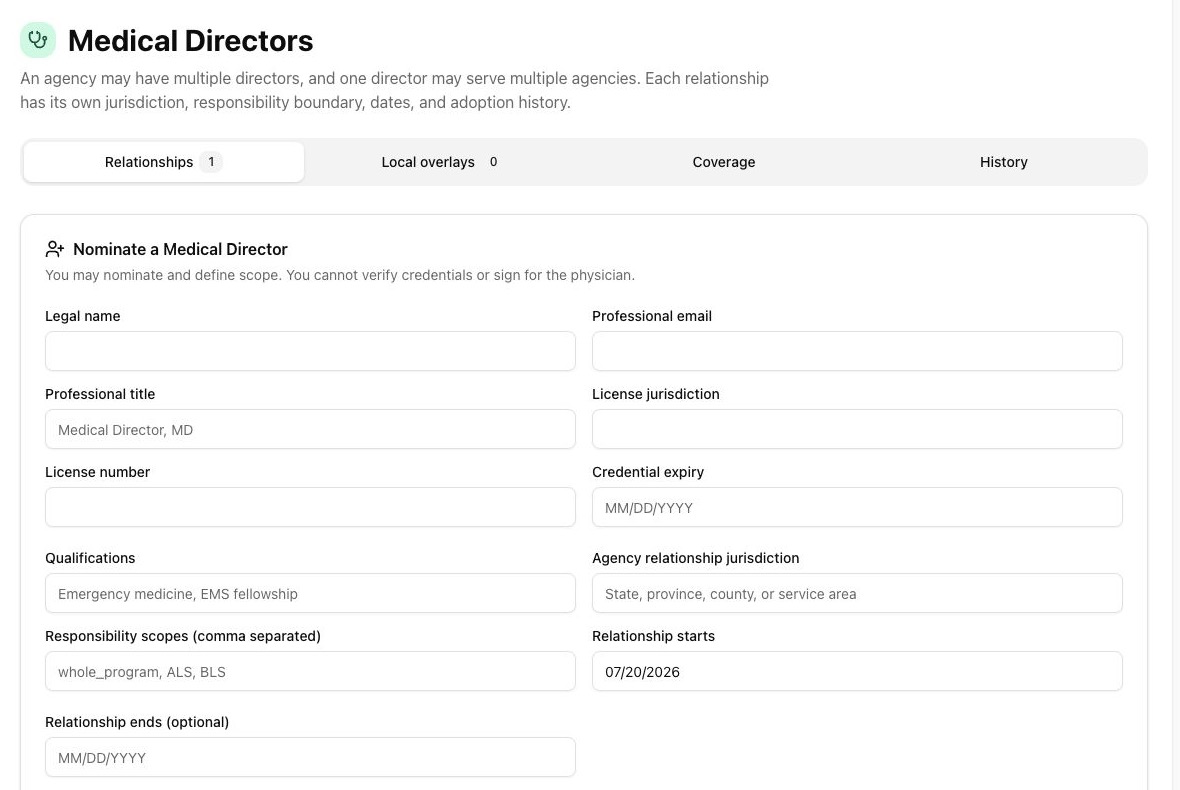
Medical Director is a separate, agency-scoped clinical role. The physician accepts a dated relationship, reviews exact content versions and source evidence, resolves local protocol overlays, and preserves adoption history within the recorded jurisdiction and responsibility scope. The role does not grant platform administration or roster access.
Student is the individual seat holder — their own training modules, practice exams, CME log, and certification status, and nothing from anyone else's record. Everything a student does here is exactly what rolls up into the Agency Admin's reporting.
Seat-based licensing and pricing
Seats are licensed per agency, not sold to individuals — there is no public "buy one seat" path. Two tiers: 5 seats at $999/year and 10 seats at $1,799/year, both annual and auto-renewing unless you turn renewal off. See the full breakdown on Pricing.
Seats are pooled, not person-locked. When someone leaves, unassign their seat and hand it to the next hire the same day — no waiting on a new license, no per-person contract change. Getting started is sales-gated by design: your agency submits a sign-up request, an NTCP Owner reviews and approves it, and only then do your own Agency Admins invite personnel and assign seats.
Certification-level and education-activity tracking
Each seat holder carries a certification level — EMT, AEMT, or Paramedic — with a self-reported expiry date, plus a running log of education evidence. A training officer sees this roster-wide instead of chasing individual spreadsheets or paper renewal cards. The log supports internal review; it does not determine external compliance.
Two things worth stating plainly rather than glossing over. First, NTCP is not currently a CAPCE-accredited CE provider; student-entered logs and agency evidence decisions remain internal — see CME / CE and what CAPCE accreditation actually means before treating a logged hour as automatically qualifying toward a state renewal requirement. Second, NTCP does not issue or guarantee NREMT or state certification — that determination always belongs to NREMT and your state EMS office. See Certification & Recertification for how the two systems relate, and check your state's requirements directly for current hours, fees, and renewal cycles.
How this fits the rest of the platform
Agency Training Management is the administrative layer sitting on top of the same training content your seat holders use day to day: certificate-prep and recertification training programs, the Full Practice Exam for exam-style practice and content-gap review, and the Drug Label Lookup for one-drug FDA label lookups using RxNav and openFDA drug-label data. Everything a student does in those tools is what a training officer sees roll up into the reporting and CME tracking described below. New to the platform generally? Start with How It Works.
Getting started
- Your agency submits a sign-up request through Sign Up Your Agency.
- An NTCP Owner reviews the request and approves the license.
- Your Agency Admin signs in, invites personnel by email, and assigns seats from the pool.
- Each invited person picks a track — Certificate Training or Recertification — and their certification-level tracking, module progress, and CME log start from day one.