

NTCP for EMS Training Programs
Running an EMT or Paramedic training program means tracking a whole cohort's progress at once. NTCP gives your program one dashboard for every student's modules, quiz scores, and practice-exam readiness.
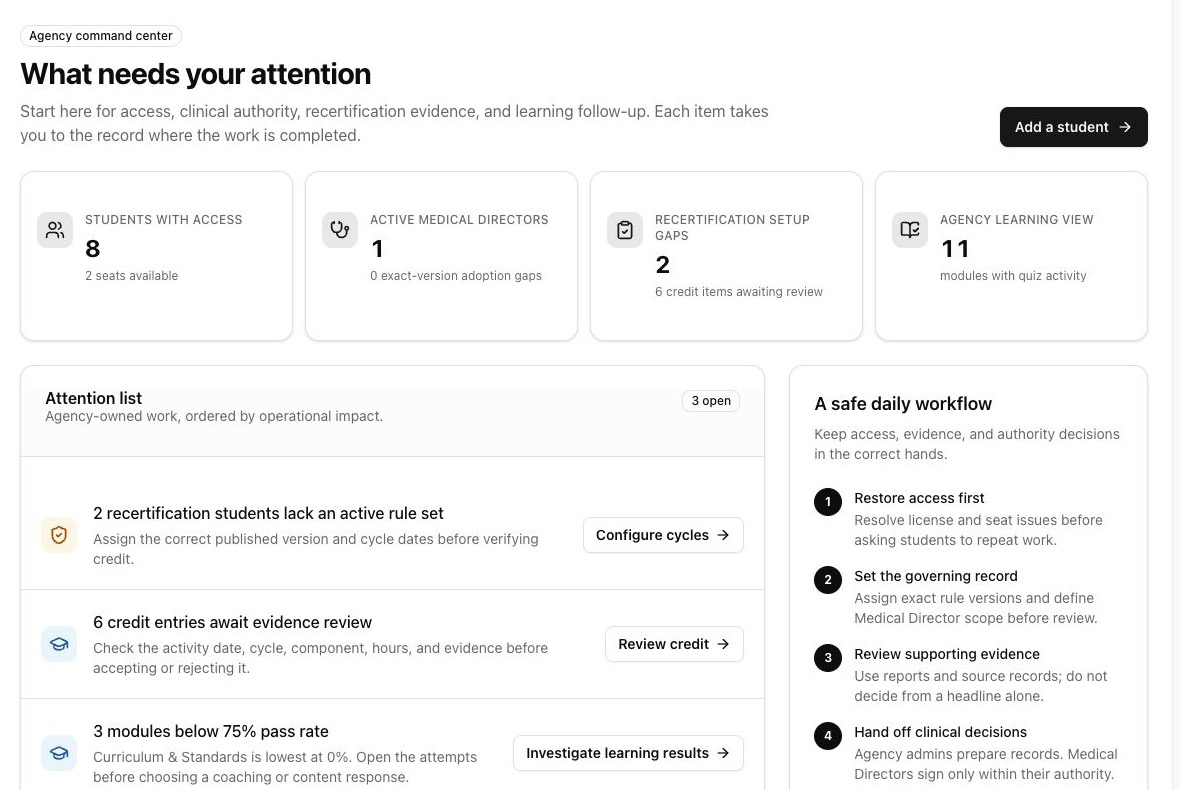
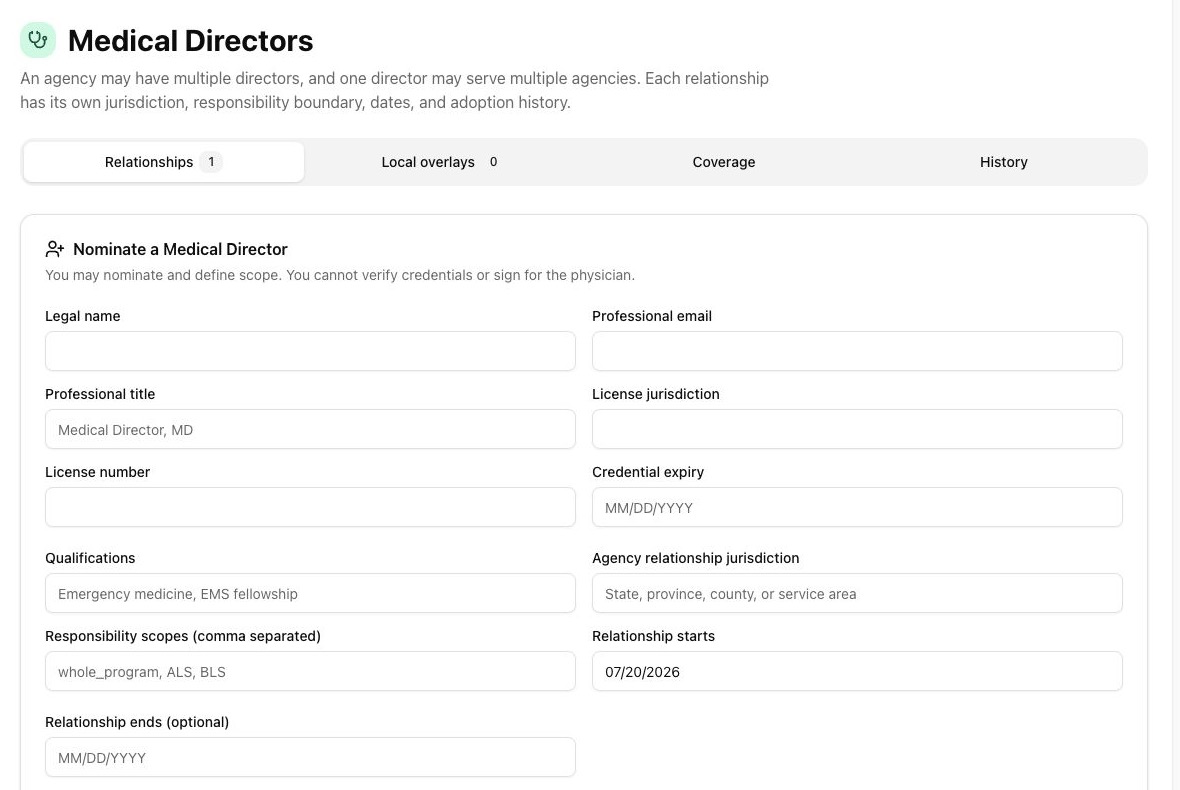
The agency dashboard starts with work that needs attention and links to the record where that work is completed.
Current release-candidate UI · synthetic demonstration data
Why training programs use NTCP
- Cohort-wide visibility into module completion and quiz performance, not per-student spreadsheets
- Structured, self-paced content that supplements your program's own instruction
- Practice exams that mirror real certification exam structure, with a per-domain readiness breakdown
- Seat-based licensing scaled to your program's enrollment, not sold seat-by-seat to individuals
What NTCP is — and isn't — for a training program
A training program's core job is accredited coursework, lab skills, and clinical or field internship hours — none of which NTCP provides or tracks. What it adds is the layer around that: structured certification-prep content organized the same way your curriculum is (by EMT, AEMT, and Paramedic level), module quizzes with a 75% pass threshold, and a Full Practice Exam students can run on their own time between didactic sessions and clinical rotations. Students work through it self-paced, whenever they have time between lecture, lab, and clinicals — not on a fixed schedule your program has to build class time around.
Tracking a cohort's progress, not just one student's
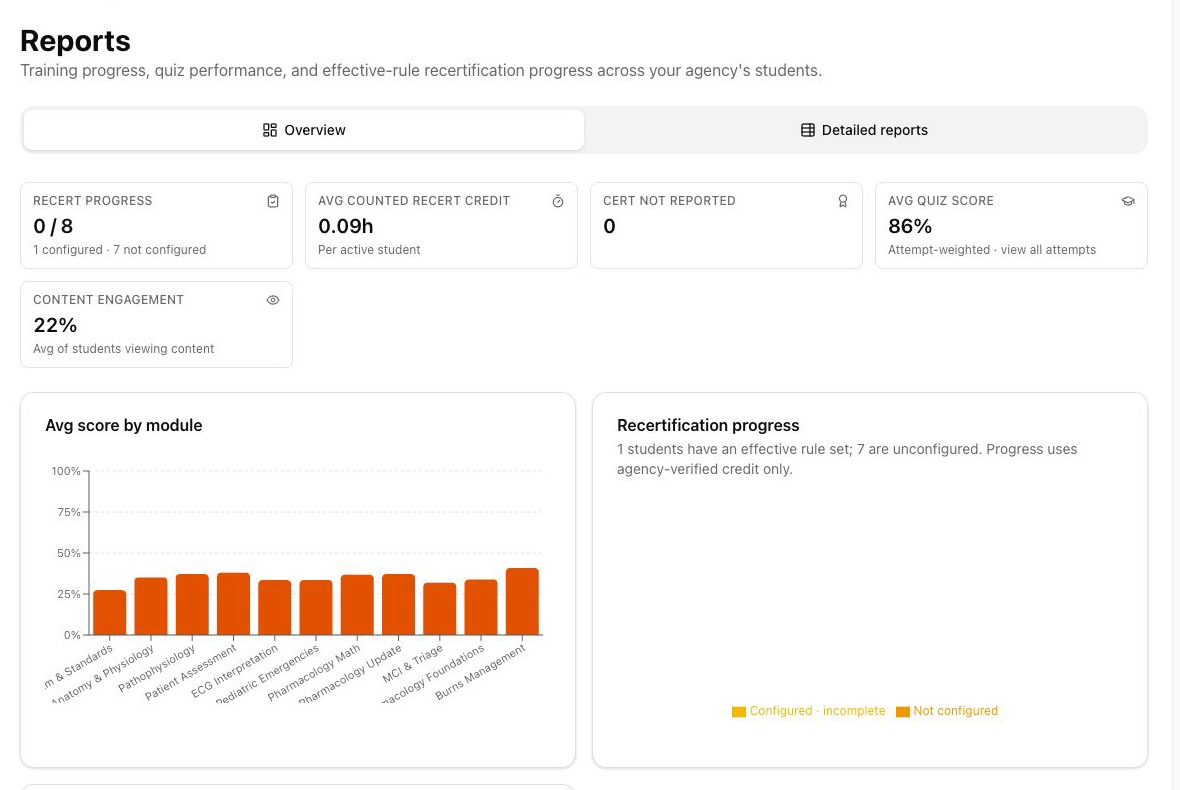
Most exam-prep tools are built for a single learner checking their own progress. NTCP is built the other way for a training program: an instructor or program director sees the whole cohort's standing first, then drills into an individual only when something needs attention. Module completion reporting is cohort-wide — attempts, average score, and pass rate per module, plus a "most missed questions" list ranked worst-first so you know which concepts the group is actually struggling with, not just which students are.
From there the reporting goes three levels deep. Level one is the module-wide numbers above. Level two is every individual quiz attempt across the cohort — filterable by module or by student, showing who attempted it, when, and whether they passed. Level three is a single attempt's full question-by-question breakdown: the correct answer, the option that student actually picked, and the explanation. The same drill-down also answers a different question — who in the cohort hasn't even opened a given module's content yet — which is often the earlier warning sign than a low quiz score.
Practice-exam readiness across the whole class
The Full Practice Exam is a configurable 20-, 40-, or 80-question exam-style practice assessment, scored server-side so a result can't be fabricated or edited client-side, with a per-content-area score breakdown rather than one overall number. It is not an official National Registry examination or a certification-readiness prediction. For a training program that means two different views of the same data: a student a week from their exam date can see exactly which domains still need work, and a program director can see readiness trends across an entire graduating cohort before anyone sits for the real thing — a much earlier signal than finding out after the fact who passed on the first attempt.
Certificate Training vs. Recertification tracks
Track assignment is per person, not per program. Most students in a training program's initial cohort are on the Certificate Training track — working toward their first EMT, AEMT, or Paramedic credential. If your program also runs continuing-education or refresher offerings for already-certified providers, those students go on the Recertification track instead, with its own recertification training content and CME log. Both tracks show up side by side in the same Agency Admin dashboard, so a program running both kinds of cohorts doesn't need two separate systems.
Two disclaimers worth stating plainly
NTCP does not issue or guarantee NREMT or state certification — that decision always belongs to NREMT and your state's EMS office, not to a training-prep platform. See Certification & Recertification and NREMT vs. State Certification for how the two systems relate, and check your state's requirements directly for current hours, fees, and renewal cycles rather than relying on a generic number here. Separately, the CME log built into the Recertification track is self-reported and not yet CAPCE-accredited — see what CAPCE accreditation actually means before treating a logged hour as automatically qualifying toward a state renewal requirement.
Seat-based licensing sized to your program
Seats are licensed per program, not sold one-off to individual students — there is no public "buy one seat" path. Two tiers cover most cohort sizes: 5 seats at $999/year and 10 seats at $1,799/year, both annual and auto-renewing unless you turn renewal off. Seats are pooled rather than person-locked, so when one cohort graduates you can unassign their seats and hand them to your next intake the same day, instead of waiting on a new license or a per-student contract change. Full breakdown on Pricing.
Getting started
- Your program submits a sign-up request through Sign Up Your Agency.
- An NTCP Owner reviews the request and approves the license.
- Your program's Agency Admin signs in, invites students by email, and assigns seats from the pool.
- Each student picks a track — Certificate Training or Recertification — and their module progress, quiz history, and practice-exam readiness start tracking from day one.
How this fits the rest of the platform
Training-program reporting sits on top of the same tools every other agency type on NTCP uses: certificate-prep and recertification training programs, the Full Practice Exam, and the Drug Label Lookup — a one-drug FDA label reference built on real RxNav (NLM) and openFDA drug-label data, not a static reference list, that students can use while studying a weak content area. See the full role-based, seat-licensed platform on Agency Training Management, or start with How It Works if you're new to the platform generally. NTCP also supports the same underlying licensing and dashboards for fire departments, EMS services, and hospital-based EMS programs, if your training program shares infrastructure with an operational agency.